
By Aaron Lobbestael, Sr. Director of Advanced Technology
Healthcare technology is advancing at an incredible pace. Artificial intelligence, connected devices, and increasingly sophisticated analytics are creating opportunities to gather, interpret, and act on patient information in ways that were unimaginable just a generation ago.

Much of the conversation focuses on what these technologies can do. Less attention is paid to a more fundamental question: how trustworthy is the data that powers them?
That question becomes even more important as healthcare systems rely on connected technologies to inform decisions, identify patterns, and generate insights. Because, regardless of how advanced an algorithm may be, its value is ultimately tied to the quality and integrity of the information it receives.
At Nonin Medical, we’ve spent more than four decades focused on the challenge of capturing dependable physiological data in real-world clinical environments. Throughout that time, one lesson has remained consistent. The technologies that earn trust are built on a foundation of rigorous engineering, thoughtful validation, and a deep understanding of the people they are designed to serve.
As healthcare continues to evolve, several principles remain just as relevant today as they were forty years ago.
1. Start by understanding the real problem
One of the most valuable lessons in product development is that the solution customers ask for is not always the solution they actually need.
A clinician may request a thicker cable because cords are frequently damaged. But the underlying challenge may not be cable durability at all. The real need might be greater mobility, a simplified workflow, or a wireless solution that eliminates the problem altogether. Collecting feedback is only part of the process. Engineers also need to see how technology fits into the realities of patient care.
Early in Nonin’s history, engineers spent time observing clinicians in real-world care environments to understand how devices were actually being used. Those experiences shaped the company’s approach to product development. Effective healthcare technology begins with a clear view of what clinicians are trying to accomplish, the information they need, and how technology can support—not complicate—their work.
2. Technical expertise remains essential
Healthcare technology may be changing rapidly, but the complexity of human physiology has not become any simpler.
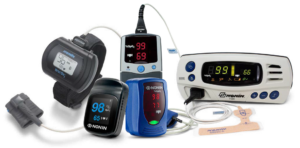
Pulse oximetry, for example, depends on accurately detecting physiological signals across an extraordinarily diverse patient population. A device may be used on a premature infant in the NICU, an adult recovering from surgery, or an older patient managing chronic disease at home. It must perform across this wide range of environments and conditions, including motion, low perfusion, and other physiological challenges.
Meeting that level of reliability requires a deep knowledge of the signals being measured, the factors that influence them, and the many ways patients differ from one another.
Strong engineering starts with those fundamentals. A clear grasp of the underlying physiology helps engineers build technology that performs consistently when clinicians and patients depend on it most. Once understood, the appreciation turns into an operating range and design constraints. These constraints create the space for innovation.
3. Representative validation strengthens confidence in technology
Every patient population contains meaningful variability. Differences in anatomy, circulation, tissue thickness, skin pigmentation, movement, and underlying health conditions can all influence how a device performs. Any technology intended for broad clinical use must account for that variability.
This is why representative validation remains such an important part of healthcare technology development. Validation efforts should reflect the diversity of the patients who will ultimately use and depend on a device.
Throughout my career, I have found that some of the most valuable engineering insights come from studying situations that challenge assumptions. What happens when circulation is compromised? How does a device perform when a patient can’t remain still? How do physiological differences influence signal quality?
Complex clinical conditions often reveal aspects of a technology that might otherwise go unnoticed. Representative validation helps ensure a device will perform as intended across the broad range of patients encountered in clinical practice.
4. The future of AI depends on the quality of the foundation
Artificial intelligence has enormous potential to transform healthcare. From clinical decision support to predictive analytics, AI-driven tools may help clinicians identify patterns and insights that would otherwise be difficult to detect.
But AI systems can only learn from the information they receive.
If the underlying measurements are incomplete, inconsistent, or unrepresentative, those limitations can carry forward into the systems built upon them. Conversely, reliable measurements and representative datasets create stronger foundations for future innovation.
This is why the principles of device development remain so important in an increasingly connected healthcare environment. Reliable hardware, rigorous validation, technical expertise, and a commitment to understanding end users all contribute to higher-quality data. Higher-quality data, in turn, enables more trustworthy connected systems and AI-driven technologies.
The future of healthcare will undoubtedly include more connected devices, more advanced analytics, and more sophisticated AI tools. But the success of those innovations will continue to depend on the same principles that have guided medical device development for decades.
Understanding users, validating technology across the populations it serves, and maintaining a commitment to data integrity are not legacy practices. They remain essential to building healthcare technology clinicians and patients can trust.